
How Much Does Tankless Water Heater Installation Cost in 2026?
Transparent pricing breakdown for tankless water heater installation. Learn what drives costs from $5,000 to $9,000 and how to budget for your upgrade.
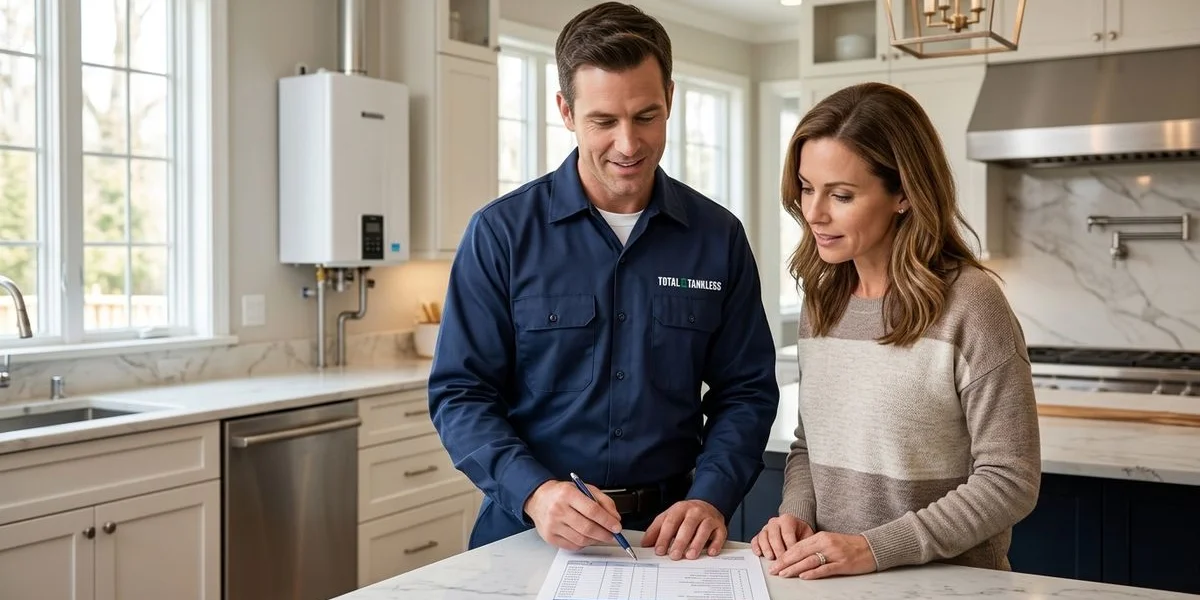
Our clients constantly ask us: How Much Does Tankless Water Heater Installation Cost in 2026?
The honest answer is that your specific home infrastructure dictates the final number. A 2026 Angi industry report places average tankless installations around $2,635, but complex retrofits can easily push past $5,000.
We will break down exactly what goes into these numbers so you can budget with confidence. Let’s look at the data, what it actually tells us, and explore a few practical ways to lower your bottom line.
The Two Main Cost Scenarios
We divide these projects into two broad categories for accurate estimating. First-time conversions require extensive modifications, while direct replacements utilize existing setups. Understanding your starting point is the crucial first step.
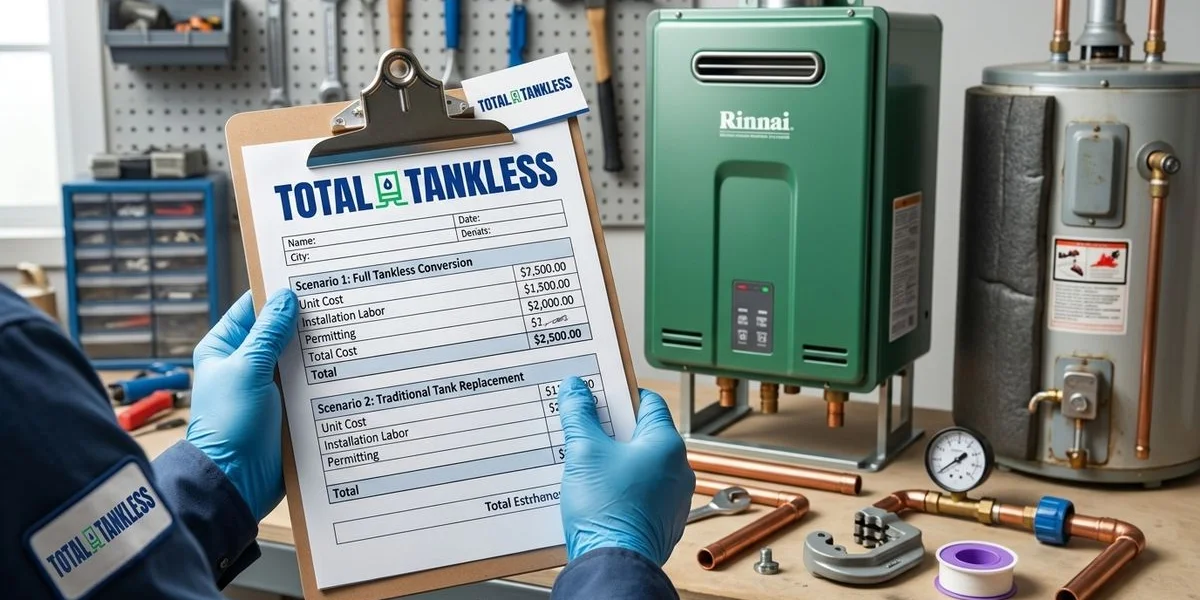
First-Time Conversion: $5,000 to $9,000
Expect to pay between $5,000 and $9,000 for a complete job if you are switching from a traditional storage tank. This higher range accounts for the necessary infrastructure upgrades.
Our technicians typically spend a full day running a new dedicated gas line to handle higher demands. A modern unit often requires a 199,000 BTU gas supply, which usually means replacing standard 1/2-inch pipes with 3/4-inch lines. Proper venting is another major factor.
Non-condensing units require expensive Category III stainless steel venting, which drives up material costs significantly.
Direct Replacement: $3,000 to $5,500
Your costs drop significantly if you already have the proper gas line and venting in place. A straightforward swap typically runs between $3,000 and $5,500 depending on the brand.
We find that swapping out an older unit for a current 2026 model like a Rinnai RU199iN only takes three to five hours. Plumber labor rates average $150 to $250 per hour in the US. You save thousands by reusing the existing wall mounts, dedicated circuits, and PVC exhaust runs.
What Drives the Cost?
Several specific factors push your installation toward the higher or lower end of these ranges. Our pre-installation assessments evaluate each of these points to avoid surprise charges later.
Your Current Water Heater Type
Homes with existing gas tank water heaters are the easiest and least expensive to convert. The gas source is already nearby, keeping modifications minimal.
We run into major cost increases when homeowners switch from an electric tank to a gas tankless system. You have to factor in the price of routing a brand new gas line from the meter.
Electric tankless units are not always a cheap workaround either. Many whole-home electric models require four dedicated 40-amp breakers, often forcing a full 200-amp electrical panel upgrade that adds $1,500 to $2,500 to the bill.
Gas vs Electric Tankless
Gas units account for the vast majority of whole-home installations because they deliver higher flow rates. These models easily handle the temperature rise needed for multiple simultaneous showers.
Our data shows gas systems cost more upfront but remain more cost-effective to operate long term. Electric models boast lower unit prices and do not require exterior venting. Winter ground water temperatures drastically reduce the performance of electric units in northern US climates.
Home Size and Hot Water Demand
Your peak hot water demand dictates the physical size and cost of the unit. A compact apartment might only need a 5 Gallons Per Minute system.
We install high-capacity 11 GPM units for larger four-bedroom homes with multiple bathrooms. Some expansive properties actually perform better with two smaller units instead of one massive machine. This multi-unit approach ensures faster hot water delivery to distant bathrooms but doubles your equipment costs.
| Home Size | Average Bathrooms | Recommended Flow Rate (GPM) |
|---|---|---|
| Small (1-2 beds) | 1 to 1.5 | 5.0 - 7.0 GPM |
| Medium (3 beds) | 2 to 2.5 | 8.0 - 9.0 GPM |
| Large (4+ beds) | 3+ | 10.0 - 11.2 GPM |
Accessibility and Location
The physical location of your equipment directly impacts labor hours. A utility closet on the main floor allows for a fast, straightforward installation.
We typically have to add $500 to $1,500 in labor fees for units located in tight crawl spaces or cramped attics. Technicians need adequate room to safely solder pipes and route exhaust vents. Building codes mandate specific clearances around the unit for future maintenance access.
Existing Gas Line Capacity
Older traditional tanks usually run on a 1/2-inch gas pipe supplying about 40,000 BTUs. A modern high-efficiency tankless heater demands up to 199,000 BTUs.
Our teams find that upgrading this gas line is the most common hidden cost in a conversion project. Plumbers must run a new 3/4-inch pipe from the gas meter directly to the new unit. This specific upgrade ranges from $300 to $1,500 depending on the distance and complexity of the pipe run.
Urgency and Scheduling
Emergency weekend installations always carry a premium price tag. You lose the ability to compare quotes when your old tank bursts and floods the basement.
We strongly advise planning your upgrade before your current system fails completely. Proactive scheduling allows you to book during non-peak seasons like late spring. You can often secure better labor rates and promotional pricing when plumbers are less busy.
Brand and Model Pricing Comparison
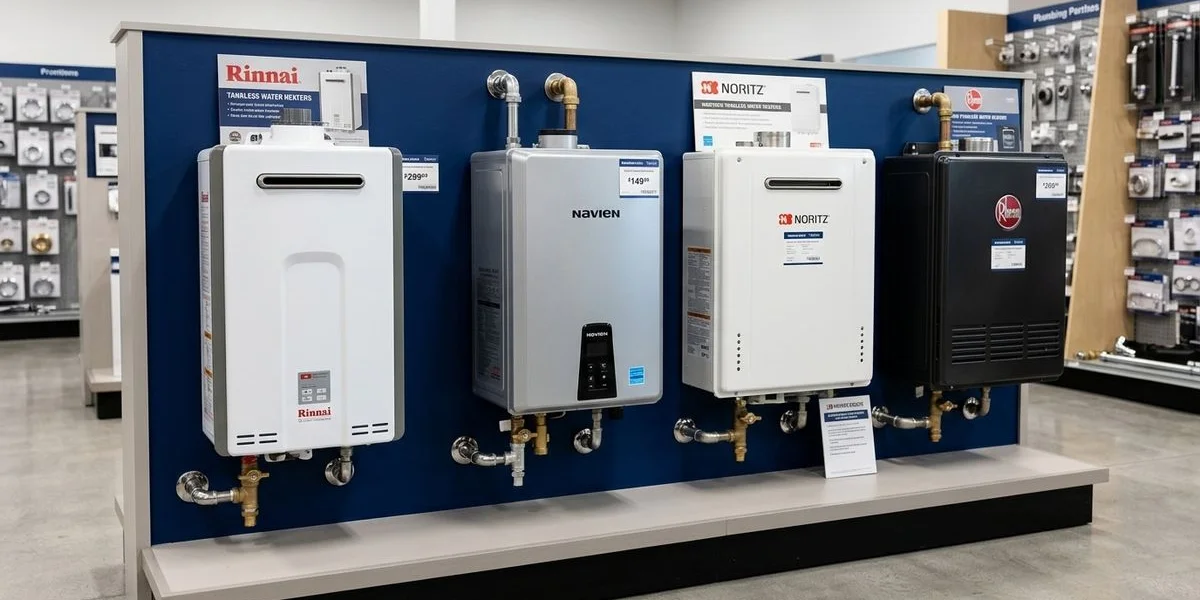
The physical equipment represents a major portion of your initial investment. Here is a look at 2026 pricing and features for the top residential gas brands:
- Rinnai: $1,500 to $3,200 for the unit. The RU199iN is an incredibly popular high-capacity condensing model. Our installers prefer Rinnai for its uniform energy factor of 0.95 and dual stainless steel heat exchangers.
- Navien: $1,700 to $2,800 for the unit. The Navien NPE-240A2 stands out as a premium choice for large homes. This model features a built-in recirculation pump and buffer tank to eliminate cold water sandwiches.
- Noritz: $1,400 to $2,600 for the unit. Solid Japanese engineering makes this a highly durable option. We often recommend the EZTR40 series for fast retrofits because it utilizes top-mounted water connections just like a standard tank.
- Rheem: $1,200 to $2,400 for the unit. The Performance Platinum line offers excellent value for budget-conscious homeowners. Readily available replacement parts make long-term maintenance very straightforward.
Keep in mind these figures only cover the hardware. Your total bill will include labor, permits, and tax.
How to Save on Your Installation
Smart planning can significantly reduce your out-of-pocket expenses. The federal Energy Efficient Home Improvement Credit (25C) offers substantial savings for taxpayers in 2026. You can claim a tax credit of up to $600 for installing a qualifying gas tankless water heater with a Uniform Energy Factor of 0.95 or higher.
Our financial team always reminds clients to check local utility companies for immediate point-of-sale rebates as well. Many local gas providers offer $200 to $500 incentives for switching to high-efficiency condensing units.
Another crucial strategy is finding an installer who conducts a rigorous on-site assessment. Lowball over-the-phone quotes frequently result in expensive change orders once the job begins.
We refuse to quote a final price without physically inspecting your venting, electrical panel, and gas meter. Getting an accurate locked-in price upfront is the best way to protect your budget.
The Bottom Line
Upgrading your water heating system requires a meaningful financial commitment. These units boast a proven 20 to 25-year lifespan, which is double the typical longevity of a standard tank.
Our team witnesses how endless hot water and reduced energy bills change the daily routines of customers. Take the time to gather in-home estimates and verify the specific models quoted. Reach out to a certified local professional today to schedule your comprehensive site assessment and lock in your price.
Get a personalized cost estimate using our free tankless cost estimator based on your specific home setup and location.

Licensed master plumber and lead technical advisor at Total Tankless with 25+ years of tankless water heater expertise.
Need professional help with your tankless water heater?
Learn About Our Tankless Installation Service