
Tankless vs Tank Water Heater: Which Is Right for Your Home?
Compare tankless and traditional tank water heaters on efficiency, lifespan, upfront cost, and long-term savings to make the right choice for your household.
We know the feeling of a sudden cold shower halfway through a busy morning. This shared frustration often sparks the debate over upgrading home plumbing systems.
Our team hears from property owners every week who are asking about a tankless vs tank water heater: which is right for your home?
The right choice separates a slightly lower upfront bill from decades of reliable comfort. We will break down the true costs, the hidden installation factors, and the daily performance differences between these two systems. Let’s explore the data and provide a clear plan for your next project.
How Each Technology Works
We often see homeowners shocked to learn that water heating is the second largest energy expense in a standard house. The U.S. Department of Energy states this single function accounts for about 18 percent of your total utility bill. Our experience shows that understanding the mechanics behind this usage helps you make smarter choices. Both systems approach the job from completely opposite directions.
The Traditional Storage Approach
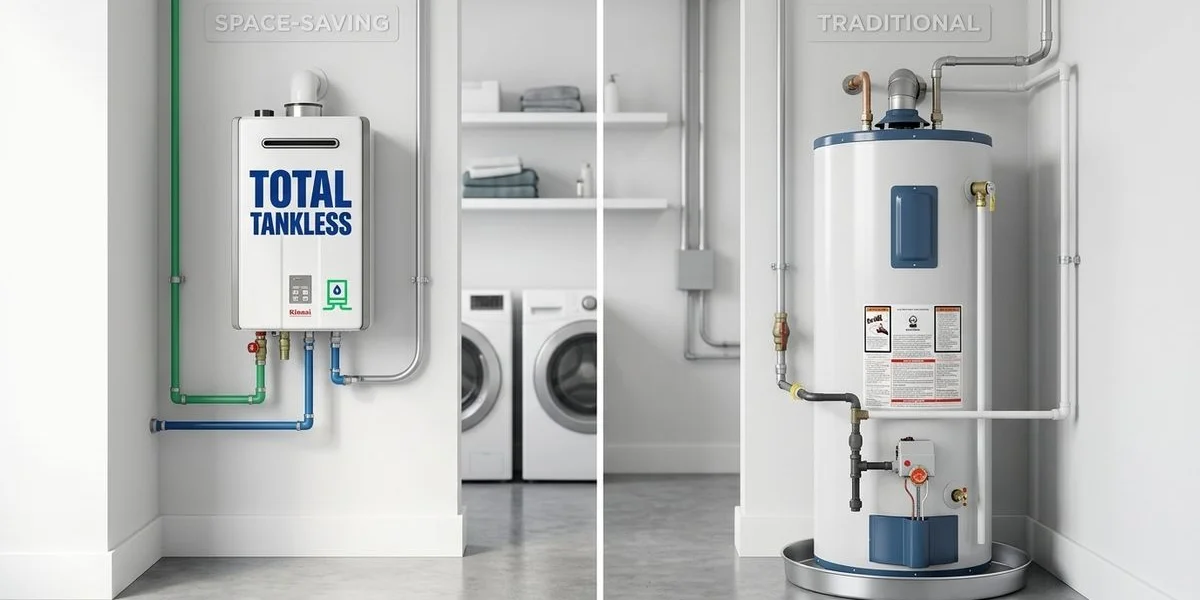
A traditional tank water heater stores 30 to 80 gallons of water in an insulated reservoir. Our technicians frequently replace these units after they have suffered from years of standby heat loss. The burner or heating element cycles on periodically to maintain the set temperature around the clock. We want to emphasize that this wasted energy can eat up a significant portion of your monthly utility budget.
The On-Demand Tankless Approach
A tankless water heater, also called an on-demand system, has no storage tank at all. Our clients love that a high-powered gas burner or electric element heats water instantly only when a faucet opens. The unit completely shuts down the moment you turn off the tap. We highly recommend this design because no water is stored and no energy is wasted.
| Feature | Traditional Tank | Tankless System |
|---|---|---|
| Storage Method | 30 to 80 gallon reservoir | No storage |
| Heating Cycle | Continuous reheating | On-demand heating |
| Energy Waste | High standby heat loss | Minimal waste |
Upfront Cost Comparison
We know that the initial price tag is the biggest hurdle for most buyers. A standard tank water heater project typically runs between $1,200 and $2,500. Our review of recent 2026 Angi data shows the national average for a tank replacement sits right around $1,337. These numbers reflect a simple, direct swap of identical equipment.
A tankless water heater demands a much larger initial investment. Our recent projects show standard installations range from $1,404 to $3,898, with an average around $2,635. Complex first-time conversions can quickly push the total toward $6,000 to $9,000. We frequently encounter hidden setup requirements that drive these conversion prices higher.
Hidden Setup Expenses
Upgrading to on-demand technology rarely involves a simple plug-and-play installation. Our installation crews find that nearly 60 percent of homes require significant electrical panel upgrades. The new high-capacity units draw 40 to 60 amps, which often means adding a new sub-panel that costs between $800 and $2,500. We also see frequent needs for larger gas lines or new PVC venting to meet modern building codes.
Operating Cost and Energy Efficiency
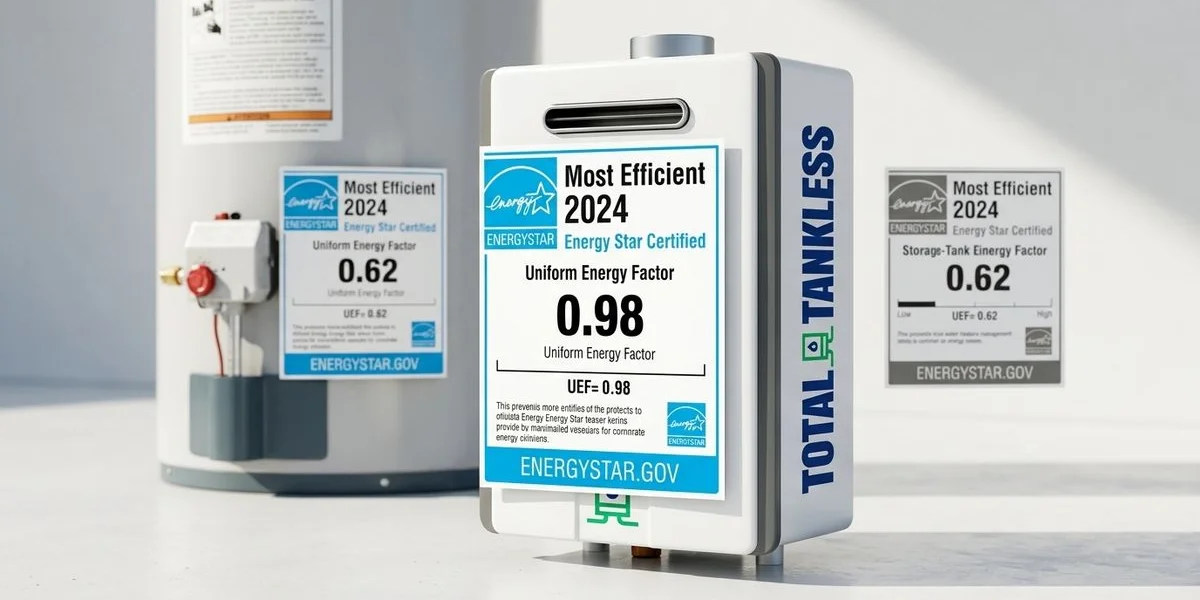
We want you to look past the installation receipt and focus on monthly utility savings. Tankless models are significantly more energy efficient than traditional tanks. Our team relies on U.S. Department of Energy estimates showing tankless units operate 24 to 34 percent more efficiently for households using under 41 gallons of hot water daily. High-demand homes still see an 8 to 14 percent efficiency boost.
Recent reports from the Energy Information Administration note that average national residential electricity rates sit around 17.1 cents per kilowatt-hour. We use these figures to calculate that a home spending $400 annually to heat water with a tank will drop to roughly $265 with a tankless unit. Over a 20-year span, those savings compound into a $1,900 to $2,700 return. Our clients find that this operational efficiency offsets a large chunk of the higher upfront installation fee.
Lifespan: 8 to 12 Years vs 20 to 25 Years
We believe the hardware longevity is the most compelling argument for going tankless. A traditional tank water heater fails after 8 to 12 years due to corrosion or sediment buildup. Our tracking data shows a well-maintained tankless unit reliably lasts 20 to 25 years. This timeline drastically shifts the long-term financial picture.
Consider the math over a quarter of a century. Our calculations show you would buy two or three traditional tanks at $1,500 each, totaling $3,000 to $4,500 in repeated replacements. A single on-demand unit handles the entire stretch with just routine maintenance. We remind customers that skipping those future replacement fees is where the real value lies.
The Mineral Buildup Warning
Hard water affects roughly 85 percent of the United States. Our technicians warn that mineral scale is the biggest threat to a tankless heater’s lifespan. An untreated system can lose 20 to 30 percent of its efficiency in a single year due to scale coating the heat exchanger. We strongly advise scheduling an annual vinegar flush or installing a water softener to protect your investment.
Space Requirements
We often help homeowners reclaim valuable utility room space by switching heating technologies. A standard 50-gallon tank stands five feet tall and demands about 16 square feet of floor space. Our designers know that tanks also require specific safety clearances, eating up even more square footage. That bulky footprint limits how you can use a basement or garage.
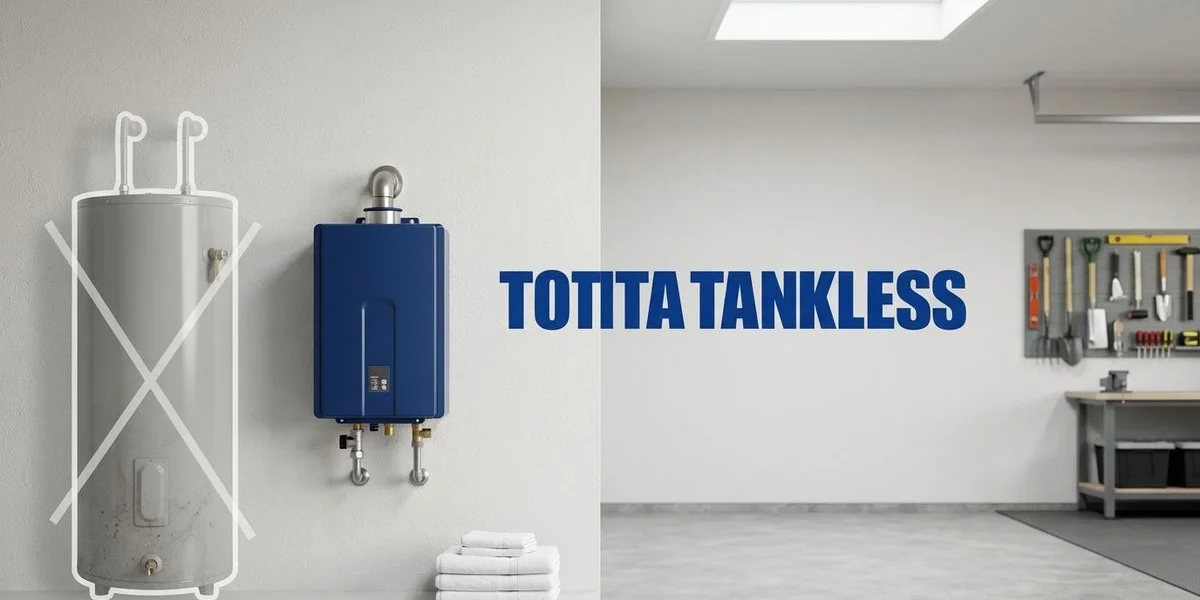
A tankless model shrinks the hardware down to the size of a small suitcase. Our installation teams mount these compact boxes directly onto the wall, freeing up the entire floor beneath them. Modern building codes even allow exterior wall mounts in warmer climates like Florida or Texas. We love seeing clients transform that old utility closet into usable storage.
Hot Water Delivery
We hear the same complaint every winter when a large family tries to shower back-to-back. A 50-gallon tank delivers consistent heat until the reservoir suddenly runs dry. Our customers dread the 30 to 60 minutes it takes for the system to reheat a fresh batch. The traditional setup simply cannot support high-volume, sequential usage.
A tankless water heater resolves this by generating heat indefinitely. Our favorite feature to demonstrate is how the hot water literally never stops flowing. You must pay attention to the unit’s gallon-per-minute flow rate to ensure optimal performance. We recommend sizing gas models between 8 and 11 GPM for a standard residential property.
Understanding Flow Rates
A standard American showerhead uses about 2.5 gallons of water per minute. Our plumbers calculate that an 8 GPM unit can comfortably handle three simultaneous showers without dropping the temperature. You will experience a temporary chill if too many fixtures open at once and exceed that cap. We prevent this bottleneck by calculating your peak household demand before selecting a model.
Environmental Impact
We point eco-conscious buyers toward on-demand systems every single time. Their superior efficiency translates directly into lower natural gas consumption and fewer greenhouse gas emissions. Our environment also benefits from less landfill waste since you toss out one machine every 25 years instead of three. The federal government recognizes these benefits with significant financial incentives.
The Inflation Reduction Act provides an excellent opportunity to reduce your tax burden. Our tax partners note that Energy Star certified gas tankless models with a Uniform Energy Factor of 0.95 or higher qualify for federal tax credits. You can claim up to $600 for qualifying installations through the year 2032. We always encourage clients to consult a tax professional to take full advantage of these savings.
Tankless vs Tank Water Heater: Which Is Right for Your Home?
We want to summarize the decision points to help you choose the best path forward. A traditional tank is usually the smart move if you meet specific short-term criteria. Our team suggests sticking with a storage unit under these conditions:
- You are working with a tight budget and need the lowest possible upfront cost.
- You plan to sell your home within the next two to three years.
- You have a very small household with minimal hot water demand.
A tankless setup requires a long-term mindset to justify the higher initial invoice. Our clients who plan to stay in their homes for five or more years easily recoup their investment. The on-demand route is the clear winner for these situations:
- Your household frequently runs out of hot water during morning routines.
- You want to reduce your monthly energy bills.
- You need to reclaim square footage in your basement or utility closet.
- You want the peace of mind of a system that will last two decades or more.
We recommend consulting with a certified plumber to evaluate your specific electrical and gas line capacities before making a final purchase. Evaluating a tankless vs tank water heater: which is right for your home comes down to these professional assessments. Our team hopes this data helps you choose the system that best supports your daily routine.
Get personalized guidance using our free tools — try the tankless cost estimator to budget your upgrade or the sizing calculator to find the right capacity.

Licensed master plumber and lead technical advisor at Total Tankless with 25+ years of tankless water heater expertise.
Need professional help with your tankless water heater?
Learn About Our Tankless Installation Service