
7 Signs It's Time to Replace Your Tank Water Heater
Rusty water, strange noises, rising energy bills — learn the warning signs that mean your tank water heater is failing and when to switch to tankless.
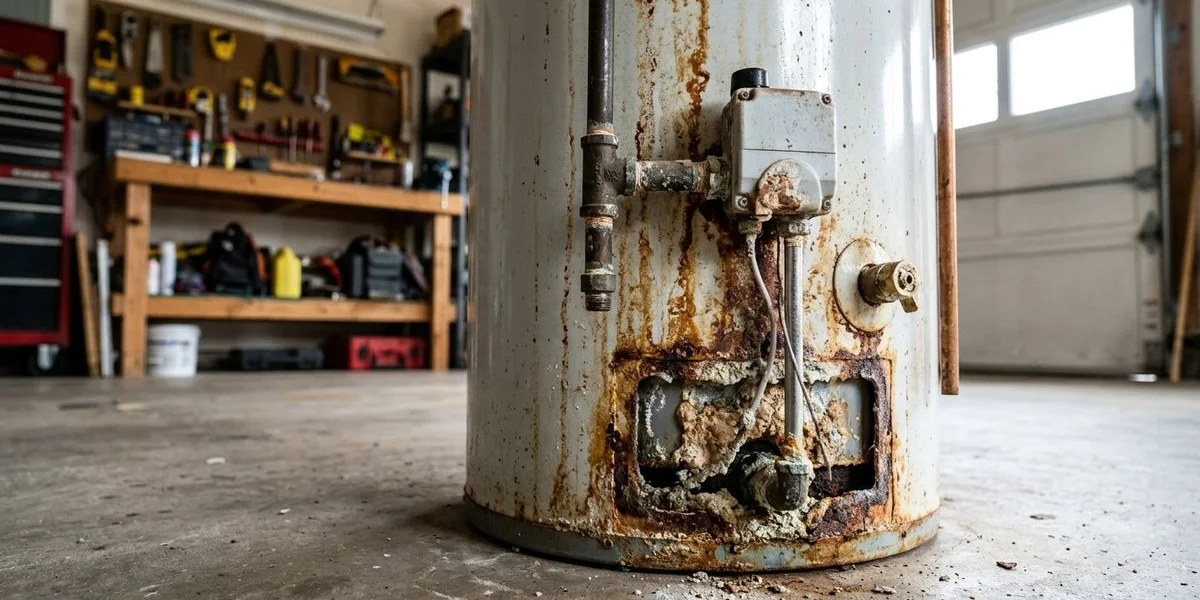
We find that tank water heaters often run quietly in utility closets until a sudden failure reveals the 7 Signs It is time for a replacement. That silent operation lulls many property owners into a false sense of security.
A recent 2025 industry report showed the average cost of water damage from a failed unit is close to $7,000. Our service technicians know that waiting for a breakdown often leads to expensive flood damage.
Data reveals specific warnings you should monitor.
Here are the signs to replace your equipment before disaster strikes.
1. Your Unit Is Over 8 to 12 Years Old
We generally expect a traditional gas tank water heater to last between 8 and 12 years. An electric model might push that lifespan to 10 or 15 years with proper maintenance. Major brands like Rheem use a simple four-digit code where the first two numbers are the month and the next two are the year.
Our crews always check the manufacturer label to find the exact production date before making any recommendations. Companies like A.O. Smith use a more complex letter and number combination to indicate the manufacturing date. Decoding this serial number gives you the exact age of the equipment.
We recommend starting to plan a replacement once a gas unit hits year eight. A planned upgrade gives you time to gather multiple quotes. This proactive approach avoids premium emergency installation fees.
| Water Heater Type | Average Expected Lifespan |
|---|---|
| Traditional Gas Tank | 8 to 12 Years |
| Traditional Electric Tank | 10 to 15 Years |
| Gas Tankless (On-Demand) | 15 to 20+ Years |
2. Rusty or Discolored Hot Water
Our technicians know that a reddish-brown tint in your hot water means the inside of your tank is actively corroding. The sacrificial anode rod exists specifically to attract these corrosive elements and protect the steel walls. Magnesium rods offer superior protection but require frequent replacements and sometimes cause a sulfur smell.
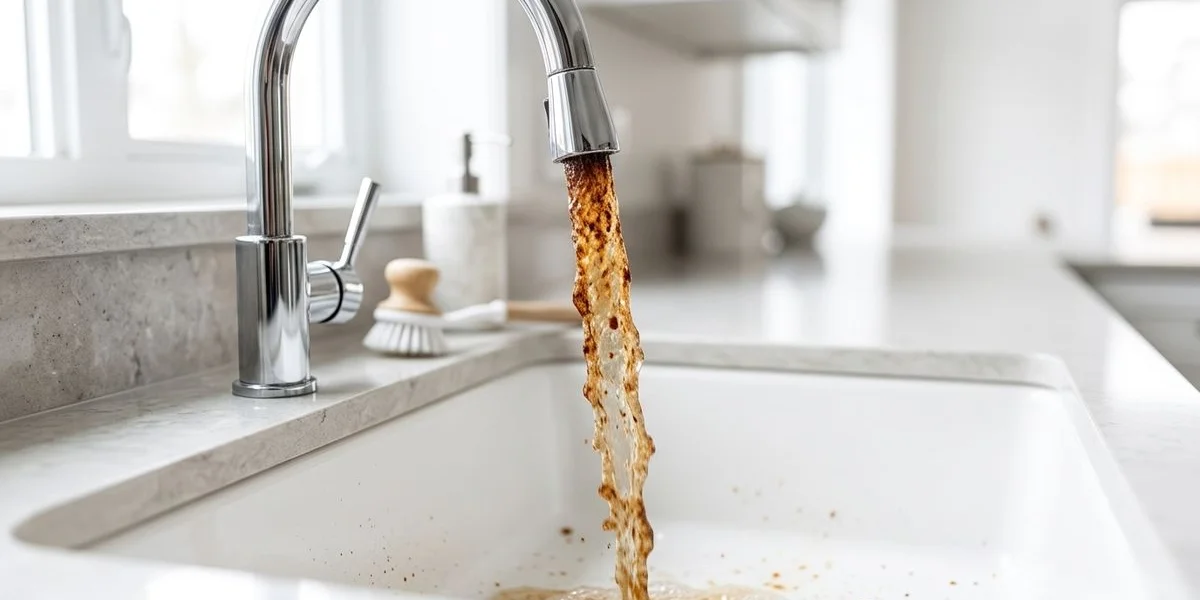
We frequently replace standard magnesium anode rods because they deplete rapidly in soft water. Budget-friendly units often feature aluminum rods because they last longer in hard water conditions. These aluminum options are cheaper but provide slightly less protection against rust.
Our preferred upgrade to prevent a rotting tank is installing a powered titanium anode rod like the Corro-Protec system. This electronic solution provides permanent corrosion protection and eliminates rotten egg odors completely. Testing the cold water first confirms the exact source of the rust.
We warn that clear cold water paired with rusty hot water proves the heater tank is failing.
Common Anode Rod Materials
- Magnesium: Excellent protection but shorter lifespan.
- Aluminum: Budget-friendly and durable in hard water.
- Titanium (Powered): Permanent electronic protection with zero odor.
3. Rumbling, Popping, or Banging Noises
Our team frequently hears complaints about loud popping or banging sounds coming from the utility closet. Hardened sediment at the bottom of the tank creates an insulating layer between the gas burner and the water. The burner then overheats the trapped moisture, causing it to percolate and rumble.
We see that leaving the thermostat set above 140 degrees dramatically accelerates this mineral scale buildup. Keeping the temperature between 120 and 140 degrees reduces scale and saves money. Prolonged overheating weakens the steel base and vastly increases the risk of a sudden leak.
Our annual maintenance plans always include a full tank flush to remove this debris. Flushing the system once a year extends the lifespan of the equipment. This quick service restores heating efficiency safely.
Signs Your Tank Needs Flushing
- Loud popping sounds during the heating cycle.
- Longer recovery times after heavy hot water usage.
- Fluctuating temperatures at the faucet.
- Visible mineral flakes in your hot water.
4. Water Pooling or Leaking Around the Base
We treat any moisture pooling around the base of your heating unit as an immediate emergency. Small puddles sometimes come from a loose fitting or a faulty temperature and pressure relief valve. Finding water seeping directly from the metal body means the inner core has fractured.
Our technicians consider replacement the only viable option for a cracked internal tank. Property owners must understand the severe financial risks of ignoring a small puddle. The average cost of water damage from a ruptured water heater is close to $7,000.
We agree with restoration experts who warn that standing water leads to active mold growth in as little as 24 hours. Shutting off the cold water supply valve immediately stops the active leak. Fast action minimizes damage to your drywall and flooring.
- Step 1: Turn off the power supply at the breaker box or shut off the gas valve.
- Step 2: Close the cold water intake valve located above the heater.
- Step 3: Attach a hose to the drain valve and direct the remaining water outside.
- Step 4: Call a licensed professional for a replacement quote.
5. Inconsistent or Insufficient Hot Water
Our office often gets calls from clients complaining that their morning shower goes cold much faster than before. Thick sediment buildup physically reduces the usable volume of water inside a traditional storage tank. Aging heating elements also lose their thermal transfer efficiency over time.
We notice that changes in household routines or new high-flow appliances place heavy demands on older equipment. Upgrading to a tankless system solves this volume problem entirely. Tankless models utilize a copper heat exchanger and a flow sensor to heat water on demand.
Our installation teams prefer this technology because it provides an endless supply without relying on a limited reservoir. Routine descaling keeps these heat exchangers operating at peak performance for decades. The endless hot water feature easily handles multiple simultaneous showers.
| Issue Source | Impact on Performance |
|---|---|
| Sediment Buildup | Displaces water, reducing total tank capacity. |
| Worn Heating Elements | Fails to reach target temperatures quickly. |
| Faulty Dip Tube | Mixes incoming cold water directly with hot water. |
6. Rising Energy Bills Without Explanation
We always ask customers to review their utility statements when assessing an aging appliance. Water heating accounts for roughly 18 to 20 percent of the average household’s total energy costs. An inefficient unit adds a massive premium to your monthly bills.
Our energy audits consistently prove that a failing burner works progressively harder to maintain the same basic output. Switching to a heat pump water heater drastically cuts these recurring expenses. The average heat pump model sips just 1,200 kWh per year, translating to about $200 in retail electric costs.
We calculate that this technology saves homeowners over $2,000 across a 15-year lifespan compared to standard gas units. Upgrading now provides an immediate return on investment through lower monthly operating costs. Federal energy standards continue to push manufacturers to develop even better models.
High-Efficiency Alternatives
- Heat Pump Water Heaters: Pulls heat from the surrounding air, using a fraction of the electricity.
- Condensing Gas Heaters: Captures exhaust gases to pre-heat incoming cold water.
- Gas Tankless Units: Eliminates standby energy losses by only firing when a faucet opens.
7. The Final of the 7 Signs It Is Failing: Visible Corrosion
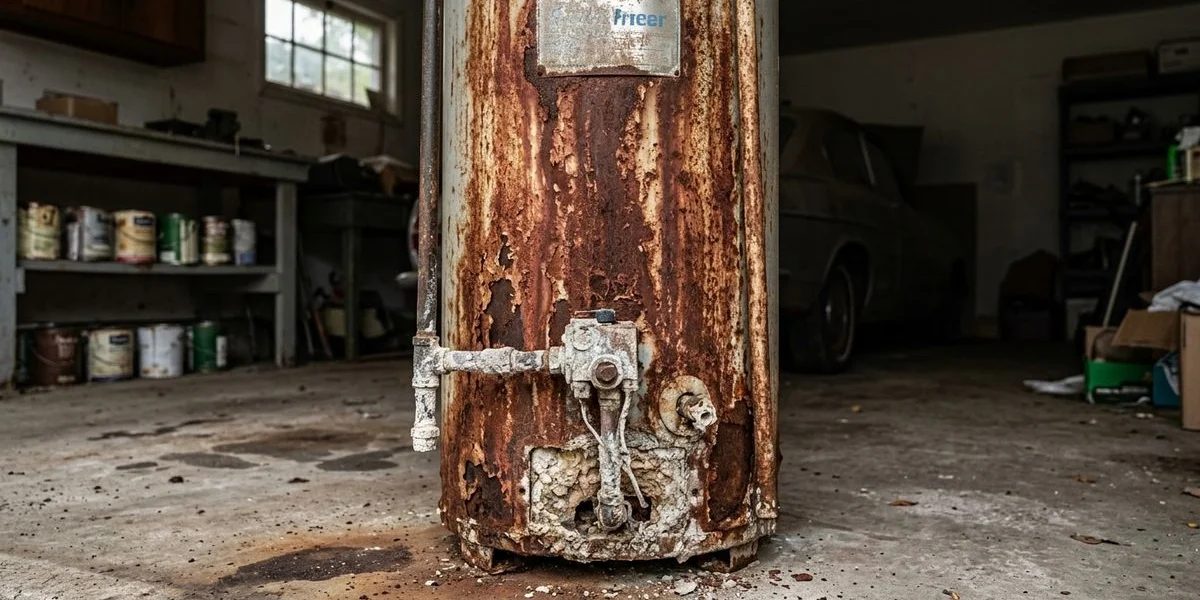
Our crews perform a thorough visual inspection of the exterior casing during every service call. Visible rust on the tank body or corrosion around pipe connections indicates a severe internal decline. An incorrectly installed or rusted flue allows dangerous carbon monoxide fumes to vent directly into your home.
We place a heavy emphasis on inspecting the deteriorating flue pipe and gas lines. Monitoring the temperature and pressure relief valve at the top of the tank prevents heavy scaling. Corrosion on the outside almost always reflects catastrophic deterioration on the inside.
Our data shows that 75 percent of water heaters fail entirely before they turn 12 years old. Scheduling a proactive replacement prevents the dangerous combination of gas leaks and water damage. Taking action early protects your family from unexpected breakdowns.
- Point 1: Inlet and outlet water connections.
- Point 2: Temperature and pressure relief valve (T&P valve).
- Point 3: Gas supply lines and exhaust flues.
- Point 4: The bottom seams of the outer metal jacket.
When to Repair vs Replace
We rely on a specific mathematical formula to help clients decide between a repair and a full replacement. A faulty thermostat or a tripped reset button on a young unit easily justifies a fast repair. The standard formula calculates the repair cost plus the unit age in years multiplied by $100.
Our plumbers advise that if the total exceeds the cost of a brand-new installation, replacing the equipment is the smarter financial move. Spending hundreds of dollars on a system that has already crossed the eight-year mark rarely makes sense. Every repair dollar spent on an aging tank is money that could fund a highly efficient modern upgrade.
We see units over 10 years old rapidly develop new problems within months of a major repair. Planning ahead gives you the luxury of choice. Replacing a failing tank is a smart investment in your home.
The Replacement Formula
(Repair Cost) + (Unit Age in Years x $100)
If the final number is greater than the cost of a new water heater, choose replacement.
Why Tankless Is the Smart Upgrade Path
Our teams strongly recommend a tankless water heater as the ideal solution for a failing residential tank. This on-demand technology delivers endless hot water while drastically reducing standby energy consumption. Premium brands like A.O. Smith and Rheem produce tankless units lasting up to 25 years.
We remind clients that while the upfront cost is higher, generous federal incentives make the economics highly favorable. Gas tankless water heaters featuring a Uniform Energy Factor of 0.95 or higher qualify for a federal tax credit up to $600. Securing the 2026 Energy Efficient Home Improvement Credit (25C) requires careful documentation.
Our tax guidance advises homeowners to include the specific Qualified Manufacturer code on their returns to claim these savings. A professional installation guarantees the system meets all local codes and warranty requirements. Modern on-demand systems deliver exceptional comfort and immense utility savings.
| Upgrade Benefit | Description |
|---|---|
| Extended Lifespan | Operates for 20 to 25 years with annual descaling. |
| Federal Tax Credits | Eligible for up to $600 under the 25C tax program. |
| Infinite Supply | Heats water continuously as it flows through the exchanger. |
| Space Savings | Mounts directly to the wall, freeing up utility closet floor space. |
We hope this breakdown clarifies the risks of ignoring an aging water heating system. Catching the 7 Signs It requires replacement early protects your property from severe flood damage and mold growth. Delaying action only increases the chance of an expensive emergency.
Our team is ready to evaluate your current setup and recommend a high-efficiency upgrade. Reach out today to schedule a comprehensive plumbing inspection. Taking care of your home means addressing problems before they escalate.

Licensed master plumber and lead technical advisor at Total Tankless with 25+ years of tankless water heater expertise.
Need professional help with your tankless water heater?
Learn About Our Tankless Installation Service